Building Green Without Breaking Ground Rules: The New Science of Sustainable Structural Materials
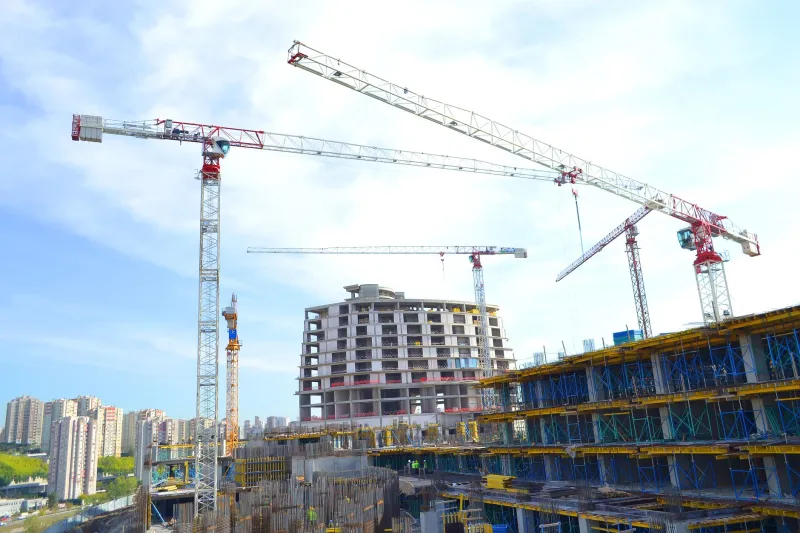
For decades, concrete has been the backbone of American infrastructure. It fills our highway overpasses, anchors our high-rise foundations, and forms the skeleton of schools, hospitals, and government buildings across the country. It is also one of the most carbon-intensive materials in the built environment, responsible for an estimated eight percent of global CO₂ emissions annually. As sustainability mandates tighten and owners increasingly demand greener project profiles, structural engineers are being asked a pointed question: Can we build just as safely with fundamentally different materials?
The answer, emerging from laboratories, pilot projects, and completed structures from Seattle to Atlanta, is a qualified yes—provided the engineering rigor remains non-negotiable.
The Problem with Portland: Why the Industry Is Looking Beyond Traditional Cement
Ordinary Portland cement, the binding agent that gives concrete its compressive strength, is produced through an energy-intensive process that releases significant quantities of carbon dioxide. For every ton of Portland cement manufactured, roughly 0.9 tons of CO₂ are emitted. At a national scale, the numbers become staggering.
Supplementary cementitious materials (SCMs) have emerged as the primary engineering response to this challenge. Fly ash, a byproduct of coal combustion, has been used as a partial cement replacement for several decades and is well-understood in terms of performance characteristics. Slag cement, derived from blast furnace operations, offers similar pozzolanic properties. More recently, calcined clays and natural pozzolans have entered broader commercial use, offering viable cement replacement rates of up to 50 percent in certain mix designs without sacrificing design compressive strength.
Geopolymer concrete represents a more ambitious departure from convention. By replacing Portland cement almost entirely with industrial byproducts activated through alkaline solutions, geopolymer formulations can reduce embodied carbon by 40 to 80 percent. Several university research programs and commercial construction projects in the United States have demonstrated structural performance comparable to conventional concrete under controlled conditions. However, geopolymer systems present challenges in quality control, curing sensitivity, and long-term durability data that still give many practicing engineers pause.
The takeaway for structural professionals is not that one formulation fits all applications, but that the toolkit has meaningfully expanded—and that understanding the engineering properties of each option is now a professional baseline expectation.
Recycled Aggregates: Closing the Loop on Construction Waste
Aggregate—the sand, gravel, and crushed stone that constitutes roughly 60 to 75 percent of a concrete mix by volume—has traditionally been sourced from quarries and riverbeds. Recycled concrete aggregate (RCA), produced by crushing demolished structures, offers a compelling circular economy alternative. The United States generates hundreds of millions of tons of construction and demolition debris each year, and a substantial portion of that material is structurally recoverable.
The engineering complexity with RCA lies in its variability. Unlike virgin aggregate, which arrives with consistent gradation and absorption characteristics, recycled material carries residual mortar paste that increases water absorption and can reduce compressive strength if mix designs are not adjusted accordingly. Research from institutions including the Portland Cement Association and various state DOTs has established that RCA can be incorporated at replacement rates of 20 to 30 percent in structural concrete applications with manageable performance trade-offs, provided that water-to-cement ratios and supplementary admixtures are calibrated to compensate.
For non-structural or lightly loaded applications—sidewalks, fill material, sub-base layers—replacement rates can be significantly higher, making RCA a practical choice for site-wide sustainability goals without placing structural elements at risk.
Rethinking Reinforcement: Steel, Fiber, and Beyond
Reinforcing steel remains the dominant tensile element in American concrete construction, and for good reason. Its behavior is well-characterized, its production standards are tightly regulated, and generations of engineers have built their practice around its predictable performance. But steel production is itself carbon-intensive, and the industry is beginning to explore alternatives with genuine structural credentials.
Glass fiber reinforced polymer (GFRP) rebar has gained meaningful traction in corrosion-prone environments—marine structures, bridge decks, and parking garages where deicing salts accelerate conventional rebar deterioration. GFRP offers a higher tensile strength-to-weight ratio than steel and is entirely immune to electrochemical corrosion. The engineering adjustment required is primarily in design methodology: GFRP does not yield in the same manner as steel, which necessitates different detailing approaches for ductility and seismic performance. ACI 440 provides design guidance, and several state transportation departments have approved GFRP for highway bridge applications.
Basalt fiber rebar, derived from volcanic rock, offers similar corrosion resistance with a somewhat different mechanical profile and is attracting growing research interest. Carbon fiber reinforced polymer (CFRP) remains expensive for general structural use but finds application in high-performance or retrofit scenarios where strength-to-weight ratios justify the cost premium.
Steel fiber reinforcement—short, discrete fibers distributed throughout a concrete mix—does not replace conventional rebar but can reduce or eliminate secondary reinforcement in certain slab and wall applications, lowering material quantities and associated embodied carbon.
The Cost-Benefit Calculus: Where Sustainability Pencils Out
One of the most persistent misconceptions in sustainable structural design is that greener materials automatically carry higher costs. The reality is more nuanced. Fly ash and slag cement are industrial byproducts that are often less expensive than Portland cement on a per-ton basis, and their use can reduce overall mix costs while improving workability and long-term durability. In markets where fly ash availability has declined due to coal plant closures, calcined clay alternatives are becoming cost-competitive as production scales.
RCA pricing varies significantly by region and project scale, but in urban markets with active demolition activity, sourcing costs can be meaningfully lower than virgin aggregate. GFRP rebar carries a higher unit cost than conventional steel but produces lifecycle savings in structures where corrosion-related maintenance and replacement costs are factored into the analysis.
What the cost-benefit calculus demands, above all, is an integrated approach. Sustainable material decisions made in isolation—without accounting for mix design adjustments, testing requirements, and potential schedule implications—can erode anticipated savings. Engineering teams that incorporate material selection into early design phases, engage specialty contractors with relevant experience, and conduct lifecycle cost modeling rather than first-cost comparisons consistently achieve better outcomes.
Safety as the Constant Variable
Through every material innovation, one principle must remain fixed: the structural system must perform reliably under the loads it will encounter throughout its service life. This is not a constraint that stands in opposition to sustainability—it is the foundation upon which sustainable design must be built.
The structural engineer's responsibility is to evaluate proposed materials against the full spectrum of performance criteria: compressive and tensile strength, modulus of elasticity, creep and shrinkage behavior, durability under freeze-thaw cycling and chemical exposure, and compatibility with existing code frameworks. Where code provisions lag behind material innovation—as is sometimes the case with emerging geopolymer and bio-based systems—engineers must apply appropriate conservatism, engage with peer-reviewed research, and work proactively with project stakeholders to document the basis of design.
The firms that are navigating this landscape most effectively share a common characteristic: they treat sustainability not as a marketing overlay but as an engineering discipline. They invest in staff education, maintain relationships with material researchers and testing laboratories, and approach each project with the same analytical rigor that has always defined sound structural practice.
The materials are evolving. The standard of care is not.
