Before the Break: Recognizing the Early Warning Signs Embedded in Every Structure

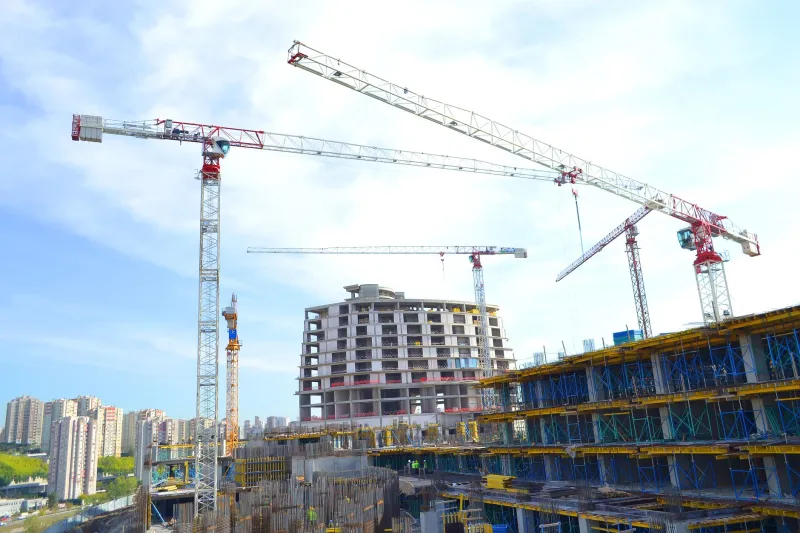
Photo by Photo by Zoshua Colah on Unsplash on Unsplash
In the aftermath of a structural collapse, investigators almost always find the same uncomfortable truth: the warning signs were there. A crack that widened over months. A floor that developed an almost imperceptible slope. A concrete column whose surface began to spall in patterns consistent with internal corrosion. The structure had been communicating its distress for years. Nobody had learned to listen.
For structural engineers, learning that language is not optional—it is foundational. And increasingly, the expectation is extending beyond the engineering community. Building owners, facility managers, and property developers in the United States are being called upon to develop a working fluency in structural literacy, supported by professional partners who can translate what they observe into actionable guidance.
The Anatomy of Early Distress
Not all cracks are created equal. This is among the first lessons taught in structural diagnostics, and it remains one of the most practically significant. A hairline crack running vertically through a concrete block wall may reflect nothing more than normal shrinkage during curing. The same crack, oriented at a 45-degree angle and widening at one end, tells an entirely different story—one that often points to differential foundation settlement, shear stress concentrations, or soil movement beneath the structure.
Engineers classify cracks by their geometry, location, width, and progression over time. Active cracks—those that continue to grow—demand immediate investigation. Dormant cracks may require monitoring but not necessarily urgent intervention. The distinction matters enormously, both for safety and for the cost implications of any remediation work.
Beyond cracking, structural professionals watch for a range of other distress indicators. Excessive deflection in floor systems—where beams or slabs visibly sag beyond their design tolerances—can signal overloading, material degradation, or connection failures. Rust staining on concrete surfaces often betrays the corrosion of embedded reinforcing steel, a process that generates expansive byproducts capable of fracturing the surrounding material from within. Doors and windows that no longer align properly in their frames, particularly in older masonry structures, frequently reflect foundation movement that has propagated upward through the building's load path.
When Soil Speaks Through the Structure
Some of the most consequential early warning signs originate not in the structure itself but in the ground beneath it. Settlement—the gradual downward displacement of a foundation as underlying soils compress or shift—is among the most common precursors to serious structural distress in the United States. In regions with expansive clay soils, such as parts of Texas, Oklahoma, and the Gulf Coast, seasonal moisture fluctuations can drive cyclical heave and settlement that gradually compromises structural integrity over years or decades.
In areas underlain by karst geology—where soluble limestone creates underground voids—sinkholes can develop with minimal surface warning, occasionally undermining foundations before any visible distress appears at grade. The catastrophic sinkhole events that have affected residential and commercial properties across Florida serve as a sobering reminder that the ground itself is a dynamic system, not a static substrate.
Geotechnical monitoring has become an increasingly important component of structural health programs for this reason. Settlement gauges, inclinometers, and piezometers installed at critical locations can detect subsurface movement long before it manifests as visible building distress—providing engineers with the lead time necessary to intervene effectively.
Modern Diagnostics: Giving Engineers Better Ears
The traditional toolkit of the structural inspector—visual examination, sounding with a hammer, a trained eye for geometric anomalies—remains invaluable. But the past two decades have produced a generation of diagnostic technologies that extend what professionals can detect, measure, and monitor with remarkable precision.
Ground-penetrating radar (GPR) allows engineers to image the interior of concrete slabs and walls without destructive investigation, revealing voids, delamination, rebar corrosion, and embedded conduit locations. Infrared thermography can identify moisture infiltration and insulation failures that, left unaddressed, accelerate material deterioration. Acoustic emission monitoring—a technique that detects the ultrasonic stress waves released when materials crack internally—can identify active fracture propagation within structural members before any surface evidence appears.
For large or complex structures, continuous sensor networks now enable what the industry calls structural health monitoring (SHM): the real-time collection of strain, vibration, displacement, and environmental data across dozens or hundreds of measurement points simultaneously. Bridges, high-rise buildings, and critical infrastructure facilities across the country are increasingly equipped with these systems, which can alert engineers to anomalous behavior within minutes of its onset.
The Fern Hollow Bridge collapse in Pittsburgh in January 2022—which occurred on the same day President Biden was scheduled to visit the city to discuss infrastructure investment—highlighted both the urgency of structural monitoring and the consequences of deferred maintenance. The bridge had been rated in poor condition for years. Modern SHM systems, had they been deployed, would likely have provided earlier and more specific warning of the deteriorating conditions that ultimately led to failure.
The Role of Building Owners and Facility Managers
Structural engineers cannot be everywhere at once. The first line of observation for most buildings in the United States is not a licensed professional—it is a building superintendent, a facilities coordinator, or a property manager making their daily rounds. This reality places real value on what might be called structural awareness: the ability to recognize conditions that warrant professional attention, even without the technical training to interpret them fully.
Practical structural literacy for non-engineers does not require mastery of load calculations or material science. It requires knowing which observations are worth documenting and reporting. A new crack that appeared after a period of heavy rain. A column that sounds hollow when tapped. A floor system that has developed a noticeable bounce where none existed before. These are the kinds of observations that, when communicated promptly to a structural engineer, can initiate an investigation early enough to make a meaningful difference.
Regular formal inspections—conducted by licensed professionals on a scheduled basis—remain the backbone of any responsible building maintenance program. For structures subject to public occupancy, many jurisdictions have codified this expectation. New York City's Façade Inspection Safety Program (FISP), for example, requires periodic inspections of exterior walls on buildings taller than six stories. Similar programs exist or are being developed in other major metropolitan areas as awareness of aging infrastructure risk continues to grow.
Structural Literacy as Institutional Responsibility
The built environment in the United States is aging. The American Society of Civil Engineers consistently assigns the nation's infrastructure a grade that reflects decades of underinvestment and deferred maintenance. In that context, the ability to recognize early structural distress is not merely a technical skill—it is an institutional responsibility shared by engineers, owners, and public agencies alike.
At ADD Structures, our approach to structural assessment is grounded in the conviction that informed observation, systematic monitoring, and prompt professional evaluation are the most reliable defenses against catastrophic failure. The structures we depend upon every day are not passive objects. They communicate their condition continuously, through a precise and learnable language. The obligation of those who build, own, and maintain them is to listen—carefully, consistently, and with appropriate professional support.
The cost of attention is always lower than the cost of collapse.