Eyes in the Earth: How Subsurface Sensor Networks Are Transforming Foundation Care From Reactive to Predictive
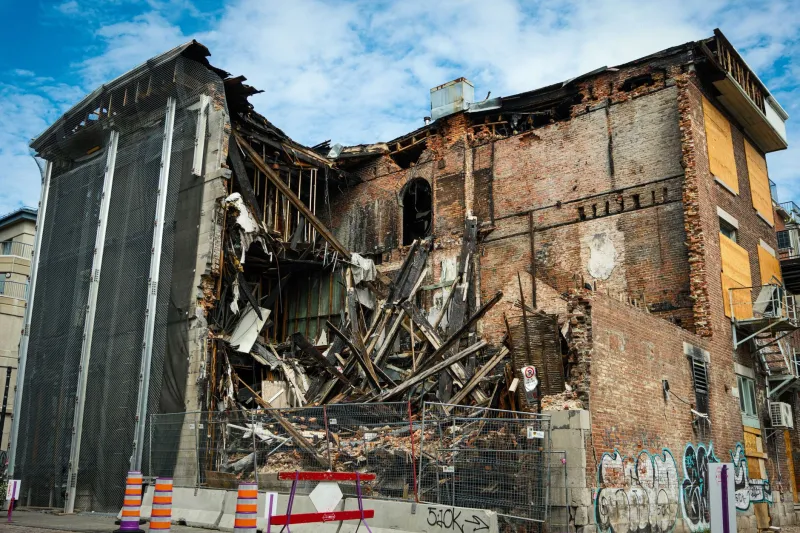
For most of the history of structural engineering, foundations operated in silence. Invisible beneath slabs, grade beams, and layers of soil, they performed their work without instrumentation, without observation, and without any mechanism for early warning. When something went wrong, the first signal was almost always a surface symptom—a crack in a wall, a door that no longer closed squarely, a floor that had imperceptibly but unmistakably shifted.
By that point, the problem was no longer early-stage. It was established, progressing, and expensive.
The emergence of real-time subsurface monitoring technology is dismantling that reactive paradigm. Across the United States, a growing number of commercial buildings, infrastructure assets, and institutional facilities are being equipped with sensor networks that observe what no inspector can see—and report what they find continuously, automatically, and with a precision that fundamentally changes the economics of foundation maintenance.
The Problem With Waiting for Cracks
Foundation distress develops through a sequence of events that unfolds over months or years before any visible manifestation appears. Differential settlement begins when soil conditions shift beneath a portion of a foundation—whether from moisture variation, subsurface erosion, clay shrink-swell cycles, or the slow degradation of organic material in fill. The foundation responds by deflecting. Structural elements above it follow. Connections accumulate stress. Materials approach their tolerance thresholds.
The crack in the wall, when it finally appears, is not the beginning of the problem. It is the announcement that the problem has been underway for a considerable period and has now reached a stage where the structure is communicating distress through the only language available to it: visible deformation.
In much of the United States, soil conditions amplify this risk considerably. Expansive clay soils prevalent across Texas, Colorado, and the mid-South are particularly prone to dramatic volumetric change in response to seasonal moisture variation. Karst geology in areas of the Southeast creates subsidence risk from dissolving limestone formations. Coastal regions contend with groundwater fluctuation and the slow compaction of saturated soils under sustained load.
Each of these conditions benefits from monitoring that begins before distress develops—not after.
What the Sensors Actually Measure
Modern foundation monitoring systems are not single-instrument solutions. They are integrated networks of complementary sensors, each contributing a distinct data stream to a comprehensive picture of subsurface behavior.
Settlement sensors, including tiltmeters, extensometers, and liquid-level systems, measure vertical and angular displacement of foundation elements with accuracy measured in fractions of a millimeter. When a section of a mat foundation begins to settle differentially from an adjacent section, these instruments record the divergence in real time—long before the differential reaches the threshold at which structural distress becomes visible.
Piezometers monitor pore water pressure within the soil mass surrounding and beneath a foundation. Elevated pore pressure is a precursor to several categories of foundation distress, including heave in expansive soils and liquefaction susceptibility in saturated granular soils under dynamic loading. Tracking piezometric data over time allows engineers to correlate pressure changes with precipitation events, seasonal cycles, and nearby construction activity.
Moisture sensors placed at strategic depths within the soil profile provide continuous data on moisture content variation—the primary driver of volumetric change in expansive clay systems. When moisture readings at a given depth begin trending in a direction associated with historical distress events, the monitoring system flags the condition before it translates into movement.
Inclinometers embedded in deep foundation elements or retaining structures track lateral displacement, providing early warning of conditions that could indicate slope instability or lateral soil pressure exceeding design assumptions.
The Role of IoT Integration and Data Analytics
The sensor hardware, while sophisticated, represents only one component of a functional monitoring system. The transformative capability lies in the integration of that hardware with IoT communication platforms and data analytics engines that convert raw measurement streams into actionable engineering intelligence.
Data from subsurface sensors is transmitted continuously—or at configurable intervals—to cloud-based platforms where it is aggregated, stored, and analyzed against baseline conditions and alert thresholds established during system commissioning. When a measurement crosses a defined threshold, the platform generates an alert directed to the responsible engineering team. More advanced implementations apply machine learning models trained on historical sensor data to identify patterns that precede distress events, enabling intervention before threshold conditions are reached.
The practical result is a monitoring posture that is genuinely predictive rather than merely observational. Engineers reviewing dashboard data for a monitored structure in Houston, for example, can observe that piezometric readings at a depth of twelve feet have been trending upward over six weeks following an unusually wet spring, correlate that trend with a modest but measurable increase in settlement sensor readings at the northwest corner of the building, and schedule a targeted geotechnical evaluation before either reading reaches a critical level.
That sequence—observe, correlate, intervene—is the operational definition of predictive maintenance. And it is only possible because the monitoring system is watching continuously.
Economic and Longevity Implications
The business case for real-time foundation monitoring is straightforward when measured against the cost of undetected foundation failure. Emergency underpinning, structural remediation, and business interruption losses associated with significant foundation distress routinely reach into the hundreds of thousands of dollars for commercial properties. For larger institutional or infrastructure assets, the figures are substantially higher.
Monitoring system installation costs vary with building size, soil complexity, and sensor density, but for most commercial applications they represent a modest fraction of the avoided remediation scenario. More significantly, the data generated by a monitoring system informs maintenance decisions with a precision that reduces unnecessary intervention—addressing conditions that warrant attention while deferring work on elements that remain stable.
Building owners and asset managers who have adopted real-time foundation monitoring consistently report a shift in how they think about their properties. The foundation, once the most opaque element of a building's structure, becomes one of the most legible. Decisions that were previously driven by periodic inspection and informed speculation are now driven by continuous data and engineering analysis.
The Future of Foundation Intelligence
As sensor costs continue to decline and IoT infrastructure becomes ubiquitous, real-time foundation monitoring is transitioning from a specialized application to a standard component of responsible building ownership. The integration of monitoring data with digital twin platforms—virtual models that reflect actual structural behavior in real time—represents the next evolution: a future in which a building's foundation communicates its condition not just to engineers, but to the building's operational management systems, informing everything from maintenance scheduling to insurance underwriting.
At ADD Structures, the integration of monitoring technology into foundation engineering practice reflects a broader commitment: that precision is not limited to what can be seen, measured, and calculated at the moment of design. It extends, through the life of every structure, to what can be observed, interpreted, and acted upon—before the earth beneath a building decides to speak for itself.