Penny-Wise, Structure-Foolish: The True Cost of Postponing Building Maintenance
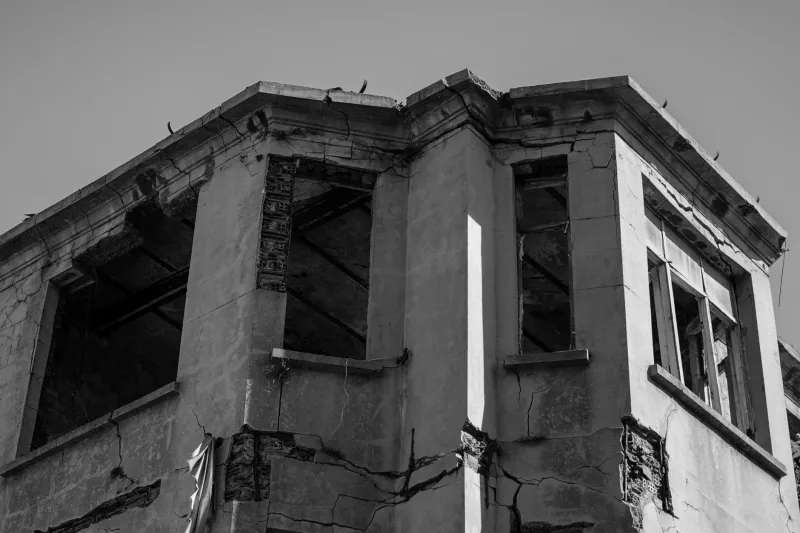
There is a particular brand of optimism that pervades facilities management in the United States — the belief that a minor crack, a slow drain, a slightly elevated moisture reading, or a hairline fracture in a concrete column can safely wait until next quarter's budget cycle. It is an understandable impulse. Capital is finite, competing priorities are real, and structural problems rarely announce themselves dramatically. They tend to whisper.
The trouble is that structures do not pause while owners deliberate. Water infiltrates. Steel corrodes. Concrete carbonates. Load paths shift. What begins as a $50,000 maintenance item — addressable with targeted intervention and minimal disruption — can metastasize into a $500,000 structural emergency within a few years if left unattended. The arithmetic of deferred maintenance is brutal, and it plays out in buildings across the country every single year.
The Psychology Behind the Delay
Before exploring the structural mechanics of deterioration, it is worth understanding why intelligent, experienced professionals routinely make the decision to wait. Research in behavioral economics consistently shows that humans discount future costs — we weigh a certain expenditure today more heavily than a larger but uncertain expenditure tomorrow. In facilities management, this manifests as a preference for deferral when the immediate consequences of inaction are not visible.
There is also the problem of attribution. When a building owner spends $60,000 repairing a drainage system today, that cost is entirely visible on this year's operating budget. When they defer that repair and spend $420,000 three years later remediating water-damaged structural framing, the causal link to the original decision is often obscured by time, personnel turnover, and incomplete documentation. The deferred maintenance that caused the crisis rarely appears on the same ledger as the crisis itself.
This disconnect is compounded by the tendency of structural deterioration to remain hidden. Unlike a leaking roof that announces itself through ceiling stains, subsurface corrosion in reinforced concrete or progressive settlement in a foundation system may show no visible symptoms until the damage is already extensive.
How Small Problems Become Large Crises: Two Illustrative Scenarios
The Parking Structure That Waited One Season Too Many
Consider the case of a mid-sized commercial parking structure in the Midwest — a type of facility that sees some of the most aggressive structural deterioration in the country due to freeze-thaw cycling and chloride exposure from road salts. An inspection in year seven of the structure's life revealed localized delamination of the concrete deck surface and early-stage corrosion staining near expansion joints. The estimated remediation cost at that point: approximately $55,000 for crack injection, joint resealing, and a protective coating application.
The work was deferred. Budget pressures were cited. The facility appeared to be functioning normally. Two winters later, water had penetrated deeply into the deck slab, reached the reinforcing steel, and initiated a chloride-induced corrosion cycle that could not be reversed with surface treatment. Full-depth deck panel replacements were required across three levels. The final project cost exceeded $610,000 — more than eleven times the original estimate — and the structure was closed to tenants for six weeks during peak operating season.
The Office Building Envelope Failure
A similar pattern emerged at a 1980s-era office building on the East Coast, where routine caulking and sealant maintenance had been repeatedly postponed due to what facility managers characterized as "cosmetic" concerns. Over several years, water infiltrated through degraded window perimeter seals and worked its way into the steel stud framing within the exterior wall assembly. By the time interior occupants reported visible water damage, the structural framing in multiple bays had experienced significant corrosion-related section loss. What would have been a straightforward $40,000 sealant replacement program had evolved into a $480,000 remediation effort involving selective wall demolition, structural framing replacement, and full envelope restoration.
In both cases, the original problem was well within the range of routine maintenance. In both cases, the decision to defer was made with incomplete information about the rate at which structural deterioration could accelerate.
The Compounding Mechanics of Structural Deterioration
Structures do not deteriorate linearly. Most forms of structural degradation follow an exponential curve — slow and nearly imperceptible in the early stages, then accelerating rapidly as secondary damage mechanisms engage. A small crack allows water ingress. Water ingress initiates corrosion. Corrosion reduces the cross-sectional area of reinforcing steel. Reduced steel capacity increases stress on adjacent elements. Adjacent elements begin to show signs of distress. Each stage of this progression is faster and more expensive to address than the one before it.
This is why the concept of the "maintenance window" is so important in structural engineering. Every deterioration process has a period during which intervention is both effective and economical. Outside that window, the range of viable repair strategies narrows, the scope of work expands, and costs escalate sharply. Experienced structural engineers recognize these windows and can often provide facility owners with a clear picture of how long a given intervention can be deferred before costs begin to rise steeply.
A Decision Framework for Immediate Action Versus Strategic Scheduling
Not every maintenance item demands immediate action. Responsible stewardship requires prioritization, and a sound framework distinguishes between conditions that are genuinely deferrable and those that carry hidden urgency.
Act immediately when:
- There is evidence of active water infiltration into structural elements
- Visible cracking has changed in width, length, or pattern since the last inspection
- Load-bearing elements show signs of section loss, spalling, or deformation
- The facility is approaching a significant weather season that will accelerate deterioration
- The maintenance window for a cost-effective repair is closing within the next twelve months
Strategic scheduling may be appropriate when:
- The deficiency is cosmetic and does not affect structural performance
- Monitoring data confirms that the rate of deterioration is slow and stable
- The repair scope can be efficiently bundled with planned capital improvements
- A formal engineering assessment has established a documented deferral timeline with defined re-inspection triggers
The critical distinction is that strategic scheduling should always be the product of an informed engineering evaluation — not a default response to budget pressure. Deferral without a documented rationale and a defined re-inspection schedule is not a strategy; it is a gamble.
The Role of Structural Engineering in Breaking the Deferral Cycle
One of the most effective tools available to building owners and facility managers is the periodic structural condition assessment conducted by a licensed structural engineer. These evaluations provide more than a snapshot of current conditions — they establish deterioration trajectories, identify approaching maintenance windows, and quantify the cost differential between acting now and acting later.
When building owners can see, in concrete financial terms, that a $65,000 repair today is likely to cost $400,000 in three years, the calculus of deferral changes fundamentally. The psychology of delay depends partly on uncertainty — on the belief that the future cost might not actually materialize. Rigorous engineering documentation removes that uncertainty and replaces it with a defensible, data-driven basis for decision-making.
At ADD Structures, this is precisely the kind of clarity we work to provide. The buildings and infrastructure assets that define our built environment deserve management decisions grounded in structural reality, not optimistic assumptions. The cost of acting early is almost always a fraction of the cost of acting late — and the structures that endure are invariably the ones whose owners understood that distinction before it became a crisis.