Structural Due Diligence: Why Pre-Purchase Engineering Assessments Are Redefining Real Estate Risk

In commercial and residential real estate alike, the phrase "buyer beware" has never carried more weight. America's building inventory is aging. According to data from the U.S. Census Bureau, the median age of owner-occupied housing in the United States now exceeds forty years. Commercial structures tell a similar story. As these buildings change hands in an active transaction market, the structural condition of what is being bought and sold carries consequences that extend well beyond cosmetic concerns or routine maintenance backlogs.
Structural condition assessments — rigorous, engineering-led evaluations that go far deeper than a standard home inspection or Phase I environmental review — have become a defining feature of sophisticated real estate due diligence. The buyers, lenders, and institutional investors who commission them are not being cautious to a fault. They are responding to a market reality: what a building looks like on the surface rarely reflects what the structure beneath it is doing.
What a Standard Inspection Misses
The general home or commercial property inspection, while useful as a first-pass tool, is not designed to render structural judgments. Licensed home inspectors are trained to identify visible deficiencies — water stains, cracked finishes, worn mechanical systems — but their scope of practice does not typically include load path analysis, foundation settlement evaluation, or assessment of structural system adequacy under current building codes.
A structural condition assessment, by contrast, is performed by a licensed structural engineer who applies a fundamentally different framework. The evaluation examines how forces move through the building: how gravity loads transfer from roof to floor to foundation, whether lateral resistance systems are adequate for wind and seismic demands, and whether the foundation's interaction with underlying soils remains stable over time.
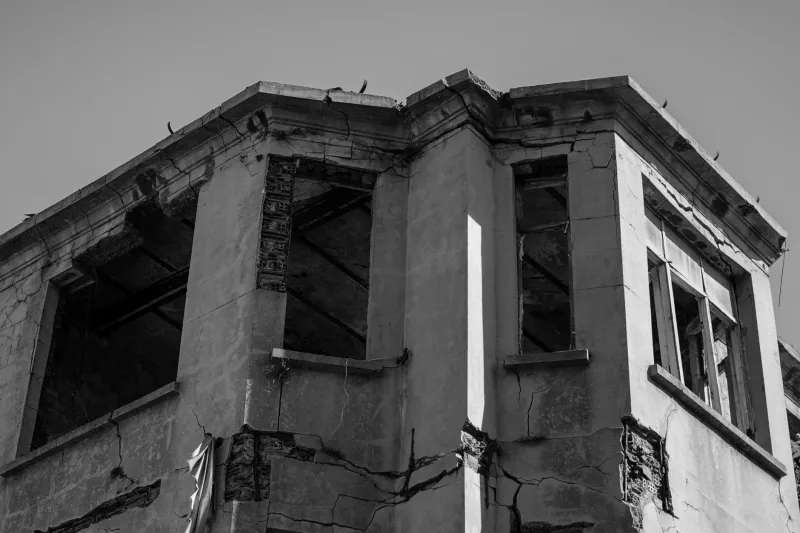
Engineers conducting these assessments look for signs that are invisible to untrained observers — differential settlement patterns in concrete slabs, hairline cracks in masonry that indicate ongoing movement rather than historical settling, corrosion in concealed steel connections, and deflection patterns in long-span framing members that suggest load redistribution has already begun. These are not cosmetic problems. They are structural narratives that, properly read, reveal the trajectory of a building's condition.
When Hidden Conditions Derail Transactions
The consequences of proceeding without adequate structural evaluation are well-documented within the industry. Consider the case of a multi-tenant commercial building in the Midwest that attracted competitive offers based on strong rental income and favorable location metrics. The seller's disclosure package included routine inspection reports, but no engineering assessment. The eventual buyer, relying on that documentation, proceeded to closing.
Within eighteen months, tenants began reporting floor vibrations and a persistent diagonal cracking pattern in the building's interior masonry partitions. An engineering investigation revealed that a previous renovation had removed a critical shear wall without compensating structural modifications. The lateral load path had been compromised for years. Remediation required temporary tenant relocation, significant structural intervention, and a legal dispute over undisclosed material defects — a scenario that a pre-purchase structural assessment would almost certainly have identified and priced appropriately before any funds changed hands.
Similar patterns emerge in residential transactions, particularly in markets where older housing stock turns over rapidly. A historic Victorian in the Northeast may present beautifully to buyers; its original timber framing, however, may have been compromised by decades of moisture infiltration, insect damage, or unauthorized structural modifications. The difference between a charming period property and a structural remediation project can be invisible without engineering eyes on the structure.
The Lender Perspective: Risk Quantification Before Commitment
Financial institutions have become increasingly attentive to structural condition as a component of collateral risk. For commercial mortgage lenders and institutional equity investors, the Property Condition Assessment (PCA) has long been a standard tool — but the structural component of that assessment has historically been among its weaker elements, often conducted by generalist consultants rather than licensed structural engineers.
That standard is evolving. Lenders financing acquisitions of older commercial assets, adaptive reuse projects, or properties in regions with elevated seismic or flood exposure are now more frequently requiring independent structural engineering letters or full condition assessments as a loan condition. The rationale is straightforward: a building with an unresolved structural deficiency is a depreciating asset, and the collateral value it represents at origination may not hold through the loan term.
For investors in value-add commercial real estate — a category that encompasses a substantial share of current transaction volume — structural assessments serve a dual purpose. They identify risk, but they also quantify remediation costs with sufficient precision to inform pricing negotiations. A structural engineer's written assessment of a foundation drainage deficiency or a deteriorated post-tensioned parking deck carries a specificity that allows buyers to model remediation costs and adjust offers accordingly, rather than either walking away from a viable asset or absorbing an unquantified liability.
Climate Volatility as an Amplifying Factor
The urgency of structural due diligence has been compounded by the accelerating pattern of climate-related stressors affecting the built environment across the United States. Flooding events in traditionally low-risk inland areas, extended drought cycles that cause soil shrinkage and differential foundation settlement, and the increasing frequency of high-wind events have all introduced structural variables that were not adequately contemplated in the design of buildings constructed decades ago.
A commercial property in the Gulf Coast region may have a structural system that performed adequately for thirty years — until a combination of subsidence, storm surge, and deferred waterproofing maintenance created a foundation condition that is now actively deteriorating. A light industrial building in the Central Valley of California may sit on expansive clay soils that have undergone significant volume change in response to prolonged drought, generating foundation movement that has compromised the building's structural integrity in ways not apparent from the exterior.
These are not hypothetical scenarios. They represent conditions that structural engineers encounter with regularity in field assessments. The intersection of an aging building stock and a changing climate has created a risk environment in which the structural condition of a property at the time of purchase cannot be reliably inferred from its historical performance.
Integrating Structural Assessment Into Transaction Timelines
One of the practical barriers to more widespread adoption of pre-purchase structural assessments has been the perception that engineering evaluations are time-consuming and disruptive to transaction timelines. In practice, a well-scoped structural condition assessment for a commercial building can typically be completed within the standard due diligence window, provided it is commissioned early in the process rather than treated as a last-minute contingency.
Engaging a structural engineering firm at the outset of the due diligence period — rather than after preliminary inspections have been completed — allows the assessment scope to be calibrated to the specific risk profile of the asset. Older masonry construction warrants different investigative focus than a post-tensioned concrete frame. A building in a FEMA-designated flood zone requires different analytical attention than one on stable bedrock in a low-hazard region.
For buyers and their advisors, the structural assessment is most valuable not as a transaction-stopper but as a precision instrument for risk quantification. It converts uncertainty into information — and in real estate, information is the foundation upon which sound investment decisions are built.
The Engineer as Gatekeeper of Investment Risk
Structural engineers have always served as stewards of public safety in the design and construction of buildings. Their role in the transaction environment extends that stewardship into the realm of investment risk. By providing independent, technically rigorous evaluations of existing building conditions, structural engineers offer buyers, lenders, and investors something that no other participant in the transaction process can provide: an objective accounting of what a structure is actually doing, and what it is likely to do next.
In an era defined by aging infrastructure, climate uncertainty, and increasingly sophisticated real estate investment practice, that accounting has become indispensable. The invisible inventory of structural conditions embedded in America's building stock is vast — and the buyers who choose to look carefully before committing capital are the ones best positioned to manage what they find.