Temperature's Quiet Toll: How Thermal Expansion Threatens Structural Integrity Across America

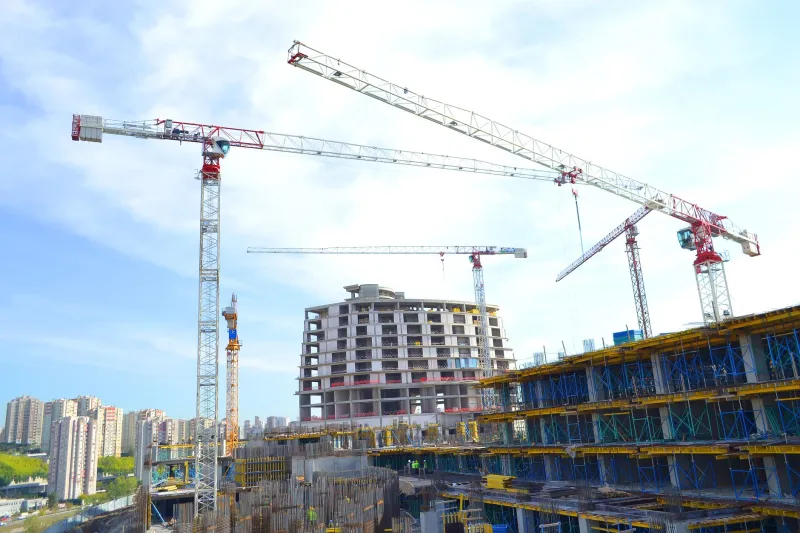
Photo by Photo by Chris Briggs on Unsplash on Unsplash
Every structure in America is in motion. Not in any way visible to the naked eye, but in a constant, slow cycle of expansion and contraction driven by temperature. Steel expands as summer heat climbs and contracts as winter temperatures plunge. Concrete follows its own thermal rhythm. Even the adhesives, sealants, and connection hardware holding a structure together respond to heat and cold in subtly different ways. When engineers account for this reality with precision, structures endure. When they do not, the consequences accumulate quietly—until they do not.
Thermal stress is not a new problem. Engineers have understood the physics of thermal expansion for well over a century. What has changed is the context. Climate patterns across the United States have grown less predictable. Regions historically characterized by moderate seasonal variation are now experiencing more pronounced temperature extremes. Meanwhile, much of the nation's infrastructure was designed and built during an era when those extremes were statistical outliers rather than routine events. The result is a growing mismatch between the thermal assumptions embedded in aging structures and the conditions those structures now face.
The Mechanics of Thermal Damage
To understand why thermal expansion is so consequential, it helps to consider the forces involved. Steel expands at a rate of approximately 0.0000065 inches per inch per degree Fahrenheit. For a 500-foot steel bridge, a temperature swing of 100 degrees Fahrenheit—entirely common across much of the continental United States—produces a linear expansion of roughly four inches. That four inches must go somewhere. If the structure is designed to accommodate it, the movement is absorbed gracefully. If it is not, the energy is redirected into stress concentrations at joints, connections, bearings, and concrete elements.
Concrete presents a different but related challenge. Its coefficient of thermal expansion is similar to steel's, which is one reason reinforced concrete performs as well as it does—the two materials move in rough concert. But concrete is also brittle. Repeated thermal cycling induces microcracking over time, particularly at surfaces exposed to freeze-thaw cycles. Water infiltrates those cracks, freezes, expands, and widens the fissures further. What begins as a hairline imperfection becomes a structural liability over decades.
Pavement and roadway infrastructure face analogous pressures. Asphalt softens and deforms under sustained high temperatures, leading to rutting and surface instability. Concrete pavement, conversely, can experience blowups—sudden, dramatic buckling events—when thermal expansion has nowhere to go because joint systems have deteriorated or been improperly maintained.
Where the Problem Is Most Acute
The geography of thermal stress in the United States is not uniform. The interior of the country—spanning the Great Plains, the Midwest, and the Mountain West—experiences some of the most dramatic seasonal temperature ranges anywhere on Earth. Cities like Denver, Minneapolis, and Chicago regularly see annual temperature swings exceeding 120 degrees Fahrenheit. Infrastructure in these regions must be engineered to accommodate extraordinary cumulative movement over its service life.
But the coasts are not exempt. Phoenix and Las Vegas experience sustained extreme heat that degrades materials differently than cold-climate freeze-thaw cycling, but no less thoroughly. Coastal regions in the Southeast contend with high humidity compounding thermal effects on metal components. Even temperate climates like the Pacific Northwest are experiencing more frequent and severe heat events, stressing infrastructure that was not designed with those conditions in mind.
Bridges are among the most vulnerable structure types. The combination of long spans, exposure to ambient air on all sides, and the dynamic loading of traffic creates a demanding thermal environment. Many of the nation's older bridges incorporate expansion joint systems that were designed to tolerances no longer adequate for current temperature ranges. When those joints fail—when they fill with debris, corrode, or simply wear beyond their design limits—the thermal energy they were meant to absorb is transferred directly into the bridge deck and supporting elements.
Engineering Responses: Joints, Materials, and Design Philosophy
The structural engineering profession has developed a sophisticated toolkit for managing thermal expansion, and that toolkit continues to evolve.
Modular expansion joint systems represent one of the most significant advances in bridge engineering over the past three decades. Unlike traditional finger joints or simple compression seals, modular systems use multiple interlocking elements to distribute movement across a larger area. They can accommodate both longitudinal expansion and lateral or rotational movement, making them particularly valuable in seismically active regions where multiple force types must be managed simultaneously. Modern modular joints also incorporate improved sealing materials that resist degradation from ultraviolet exposure, deicing chemicals, and repeated mechanical cycling.
At the material level, high-performance concrete formulations have substantially improved resistance to thermal cracking. Fiber-reinforced concrete—incorporating steel, glass, or synthetic fibers—distributes tensile stress more evenly throughout the matrix, reducing the severity of cracking under thermal loading. Silica fume and fly ash admixtures improve density and reduce permeability, limiting the water infiltration that drives freeze-thaw damage. These materials carry a cost premium, but that premium is routinely justified when assessed against the lifecycle maintenance and replacement costs of conventional concrete in thermally demanding environments.
For steel structures, advances in weathering steel alloys have reduced the maintenance burden associated with thermal cycling and environmental exposure. These alloys develop a stable oxide layer that limits ongoing corrosion, reducing the risk of section loss at connection points where thermal stress concentrates.
Perhaps the most consequential shift, however, is philosophical. The engineering profession is increasingly moving away from designing structures to withstand a fixed, historically derived set of thermal conditions and toward designing for a range of plausible future conditions. This approach—sometimes framed as climate-adaptive design—requires engineers to model the full envelope of temperature extremes a structure might experience over its intended service life, including scenarios that exceed historical norms. It demands closer coordination between structural engineers, climate scientists, and transportation planners at the earliest stages of project development.
Monitoring and Maintenance as Engineering Disciplines
Design and material selection establish a structure's thermal resilience, but sustained performance depends on monitoring and maintenance. Structural health monitoring systems increasingly incorporate temperature sensors alongside strain gauges and displacement monitors, allowing engineers to correlate thermal loading with structural response in real time. When a bridge deck begins exhibiting displacement patterns inconsistent with expected thermal behavior, that anomaly can be investigated before it progresses to visible damage.
Routine inspection protocols must also treat thermal management components—expansion joints, bearing assemblies, isolation pads—as critical systems rather than secondary details. A joint packed with road debris cannot perform its intended function. A bearing that has corroded past its design range of motion transfers loads it was never meant to carry. These are not cosmetic concerns; they are early indicators of structural stress that, left unaddressed, compound over time.
Precision as the Foundation of Durability
Thermal expansion will always be a reality of the built environment. The laws of physics are not negotiable. What is negotiable—what falls squarely within the domain of engineering judgment—is how thoroughly that reality is accounted for at every stage of a structure's life, from initial design through decades of service.
At ADD Structures, thermal management is not treated as an afterthought or a line item to be value-engineered away. It is recognized as a fundamental dimension of structural performance, as essential to long-term integrity as load capacity or seismic resistance. As America's infrastructure faces an increasingly demanding thermal environment, the engineers who take that recognition seriously will be the ones building structures that last.